Regression and the family home: Why the holidays can bring out our inner child.

The holiday season is frequently described as a time of joy, and togetherness; a time when we return to home, reconnect with family, and create memories. Yet for many adults, returning to the family home for the holidays can stir up feelings long buried: a sudden shift in mood, unexpected irritability, old insecurities resurfacing, or the uneasy sense of being ‘less grown-up’.
Today, we will explore with you, the psychological phenomenon often referred to as holiday regression; why it happens, how it shows up, and how you can approach it with awareness and self-compassion.
What Is Holiday Regression?
Holiday regression or hometown anxiety describes a common pattern where returning to one’s childhood home awakens implicit memories, family roles, and relational patterns from earlier life stages.
In familiar environments (the same rooms, smells, family patterns) our nervous system can revert to coping strategies we learned as children, even if they no longer serve us as adults. What feels like “going home” can also feel like stepping back in time emotionally.
Why the Holidays Amplify It
Several factors make holiday visits particularly likely to trigger regression:
Reactivation of old family roles and dynamics: Families often slip into established roles (parent, child, peacemaker, carer, people-pleaser, scapegoat) regardless of how relationships have changed since.
Emotional intensity and expectations: The holidays bring strong emotions, whether nostalgia, pressure, grief, or longing. Expectations for a “perfect” holiday can amplify internal conflict when reality doesn’t match.
Disruption of adult routines and autonomy: Returning home may mean less control over daily habits (sleep, meals, personal space), which can weaken our usual emotional regulation mechanisms.
Unconscious triggers: Familiar sensory cues (a childhood room, family rituals, certain phrases or behaviours) can activate implicit memories and the emotional self associated with them.
What Regression Can Look Like
Holiday regression doesn’t always look dramatic. More often, it’s subtle but unsettling. Common signs include:
Feeling overly sensitive, irritable, or defensive without a clear reason
Seeking approval, reassurance, or validation from parents or siblings
Falling back into silent tension, people-pleasing, or avoidance
Feeling younger than you are (both emotionally and in behaviour)
Finding it harder to hold boundaries or maintain independence
Quick emotional shifts: nostalgia turning into frustration, or sadness masked as anger
These reactions can feel confusing or shame-inducing. But in reality, they reflect familiar patterns being reactivated; a nervous system responding to cues, not a personal failure.
Why Regression Happens: Psychological Functions
From a psychological perspective, regression during the holidays can serve protective or adaptive functions.
Returning to family, even when dynamics are complicated, often brings a deep sense of familiarity. Falling back into old patterns can feel like emotional survival: a way to fit in, avoid conflict, or simply feel seen.
When adult life feels overwhelming, tapping into “child self” coping strategies, even if they’re not the healthiest, can feel easier because they are familiar and rehearsed. Our brains store early relational and emotional experiences, and being back in the environments where those experiences occurred can reactivate emotional memories before conscious thought even kicks in.
Regression can also happen when parents or family members treat us as children, rather than as adults. Phrases like “I’m your parent, show me respect” or unsolicited advice can create uneven dynamics, leaving us feeling powerless or unable to assert our adult selves. This may make setting boundaries difficult, or even feel impossible, in the moment.
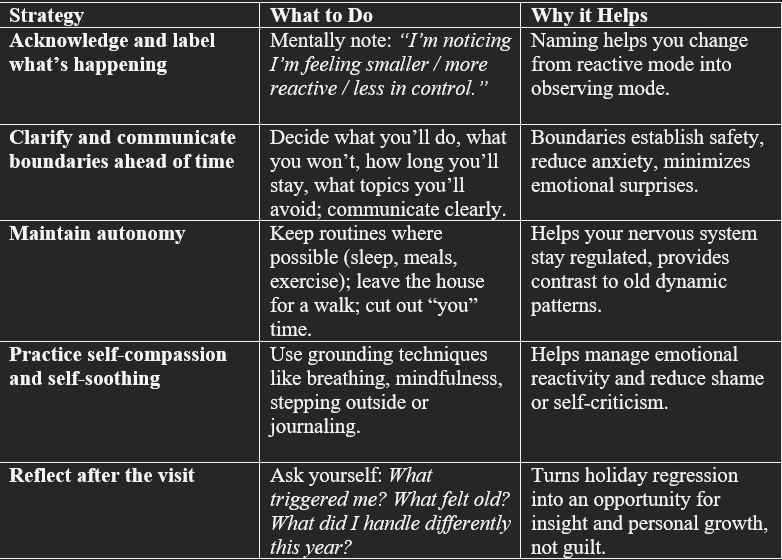
Working through Holiday Regression: A Therapist’s Guide
If you anticipate a return home this holiday season, or you’re already experiencing these feelings, here are practical steps to help you stay grounded as your adult self:
When Regression Signals Deeper Work
Sometimes holiday regression can reveal long-standing emotional patterns, unresolved trauma, or persistent unmet needs. If you notice recurring distress, disconnection from yourself, or you feel stuck in old roles long after the visit ends, or that you struggle to set boundaries, it might be an important sign to seek professional support.
How Therapy at Relational Counselling can help
At Relational Counselling, we work Integratively, which means we draw on different therapeutic approaches to meet you where you are. In sessions, we can use creative work to explore your inner child, as well as strengthening your adult self to look after this part of you.
It’s important to remember there’s a difference between regression and inner-child work.
Regression can leave you feeling stuck in a helpless child state. Connecting with your inner child, however, can be freeing; a way to rediscover your needs, creativity, and playfulness.
In our therapeutic work, we can help explore:
How early family dynamics shaped your sense of self
Which roles you keep unconsciously adopting
What boundaries or needs remain unmet
Understanding the vulnerable child parts while staying grounded in your adult self, who can guide, comfort, and lead the way forward
How to reclaim your adult autonomy in relationships that were once defined by other people’s expectations
We offer a safe, non-judgemental space to explore these areas and encourage self-expression. Strengthening the very skills that support you in building healthier patterns outside of therapy.
If you recognise yourself in our blog, or our blog raises questions for you, therapy could be the place for you to explore this. If you would like support in creating change, we’d like to help support you on your healing journey.
